
Aurelia - King's Town
Monarchy - Capital City - Farm Land - Hilly Plains - Walled City - Palace of the Phoenix - Fire Hill
Hierarchy: King > Royal Family > Nobles => Knights > Peasants
History: "Aurelia is a fledgling country. Most of the structures found are abandoned fortifications left by the Church after their expulsion from most of their former empire. Aurelia was once home to Fairy people thousands of years ago, but mostly it is an untouched wilderness ripe for cultivation. The few human tribes that are found revere bird icons of several kinds, and this religious motif translates into the more modern or medieval technology concurrent with the new settlers from the middle kingdom. House Phoenix are a former provincial house mostly wiped out defending Aurelia from Rebel Lords. The other houses have slowly been added to the Clans of Aurelia through marriage and blood-bonds throughout the years."
Military Hierarchy of Greater Aurelia
Rank of Knight's
The Black Knights - Considered to be masters of Aurelia's military and highest of the noble echelon.
King's Guard - Protect the King and exact his will. Have less free agency than Black Knights.
Queen's Guard - Protect the Queen and exact her will. A separate force not controlled by the King.
Knights of the Realm - A Knight who is either a Lord or directly serves the monarchy.
Honor Guard - A low ranking Knight who serves a lesser Lord or Knight of the Realm.
Squire - A Knight in training usually in the service of a Lord and of the nobility.
Page - A Knight in training without noble blood.
Important Settlements
Aterwall - Home of the Corvus, a large swathe of marshland along the southern coastline.
Mesa - Home of Melchior's Tribe, a walled city atop of a distinctive large flat mountain in the Red Canyons.
Highwatch - Home of the Hawks, a wood-based fortification near the border of Vasthgothia and Excelcia.
Riverstone - Home of the Falcons, series of fortifications built into the cliffs overlooking the Red River.
Eaglerock - Home of the Aquila, an impenetrable mountain fortress above the Lonesome Gorges.
Littlevalley - Home of the Milvus, the most fertile and important farming land of the whole country.
Dendro - Home of the Noctua, a forested enclave found near the mountain road known as The Greenpass.
Geglama - Home of the Gelglamites, a very important mining settlement rich in minerals and blacksmiths.
Swan - Home of Clan Olor, a beautiful port city on the western coastline of vital importance to trade.
The Northfallows - A dense collection of farming settlements found in the northern portion of the country.
The Middleburgs - A scattered cluster of fortified farming burgs several leagues within the mainland.
The Southern Haunts - A group of sparse nativist communities found south of King's Town.
Lotsfield - A historically important Northfallow near the Red Crossing, now also home of the Border Guard.
Sparrowburg - A large Middleburg due north of King's Town, the Columba here are called Sparrows.
Murkpool - Border settlement of Aterwall, essentially serves as an entrance to the southern byways.
Geography
The bulk of the country is peninsular, the south and west portions jutting out into the sea in a southwesterly dip which meets its end at the southern port town of Swan. The northern border is largely divided from the mainland by the Red Canyons which follow the mile wide Red River as it flows to the southwest. Where the river empties to the sea is the fertile northern fallow of Littlevalley which is the first of many fallows which stretch the breadth of western Aurelia. Following the Red Canyons to the east the topography and elevation becomes more and more mountainous with the settlement of Mesa being the last area reachable by foot along the Red River; which is fed by the mountain waterfall known as the Red Falls. To the south of Mesa, which serves as the northeastern corner of the country, is an equally impassable range of hills along the Dragon's Spine, also called the Red Mountains (to no surprise). This hill-country is known as the Highland, and it stretches all the way south to the mountain road known as The Greenpass; which follows the forest valley that divides the Red Mountains and the lesser mountains of the southeastern range. The Highlands gradually decline in elevation close to the center of the peninsula near the eastern groupings of the Middleburgs as an area known as The Knolls, which are largely unused for the flatter and more fertile western fallows. This center-most insulated portion of the peninsula is the location of King's Town; which resides between the Knolls and the flatter farmland of the western fallows. Aurelia has few to no forests with the exceptions of the northeastern and eastern mountain forests and the marsh forests of the southern coastline. The southern coast begins in Swan and proceeds southeasterly as seashore until the swampland makes an exact coastline nearly impossible to define. Almost on its own island (because of the nature of the southern estuary rivers) is the nation of Aterwall. Aterwall's full scope stretches with the marsh south even beyond the borders of Aurelia and fringes the expansive eastern wilderness of Sangewall. To the north of Aterwall, only a few miles from Murkpool, is the mountain pass of the Lonesome Gorges. While technically outside of Aurelia's borders the fortress of Eaglerock is only a few leagues east above the pass; and a few more leagues east lies the independent community of Geglama.
General Culture
Natives of the Aurelian mainland had practiced the druid-like religious worship of bird icons since the earliest days of human expansion out of Eden. This was facilitated by the Fairy who revered beauty of all kinds, and much of their method of exaltation was adapted by the fledgling humans; but the Fairy would diminish into the East as an increasing tide of migrating humans arrived on the peninsula, leaving the nomadic humans to develop their own religious forms and denominations. Over time the nomadic tribes migrated from the peninsula to the mainland (probably due to war or famine or merely because they were pushed out by the dominant and established avian tribes) and as a result the avian-based religions of the peninsular communities were largely abandoned for other forms of polytheism; such as beast and dragon worship. The peninsular tribes would remain largely intact compared to their mainland counterparts, who were then largely subjugated by the Immortal Church over the next thousand years; with the more stubborn creeds being systematically exterminated by the Holy Armies. As a whole the country now known as Aurelia escaped much of the scrutiny of the Immortal Conquest much due to the resilience of their Vasthgothian neighbors to their north; the quieter population of the peninsula were allowed to remain relatively unchecked as a result of their insular nature. The clans that arose from this era each revered their own avian deity and these icons would help shape the Houses of Aurelia in its fledgling years. House Phoenix was formed from the families of a Rebel Clan from the mainland (known only as the ash-keepers) which had secretly held the old polytheistic traditions for generations under the Church. After the Rebellions, House Phoenix returned triumphantly to the Aurelian peninsula as leaders/conquerors and carved out territory in the mostly virgin lands of their forefathers.
Though House Phoenix were midlanders in appearance they were quiet like the avian tribes in practice, and their return was largely welcomed by the native populace with relative ease (the formidable state of their army didn't hurt). But even so, House Phoenix brought with it many modern and alien customs such as a stringent military structure as well as clothing and armor advances from the mainland. New habitations were also erected in the Excelcian custom which with the mixture of tribal influences became distinctly Aurelian in style. Towns sprung up everywhere within the peninsula in just a few short years. Within two generations the Aurelian people found themselves among a blend of old and new ideas which also coincided with a widespread awakening of enlightened minds. Philosophy, practical academics, and the advance of technology came quickly to the forefront as Aurelian priorities; and for the first time in centuries higher education became available for the general public. Trade routes with Denastrus and the southern gulf colonies also brought with it an abundance of diversity and affluence. Aurelia had changed very drastically from a sequestered nation of feuding clans into one of the greatest civilizations of the modern era. Currently there are five noble houses: The Conscreor, The Corvus, The Aquila, The Noctua, and The Olor. With the peasant majority making up what is known as the Columba, or Aurelian Citizenry.
Castles
As Aurelians are lovers of nature, cities and domestication are kept at a minimum; the exception of course being the necessity for formidable defensive structures. Already in Aurelia's short past have the importance of such defenses been proven. The invasions from both Provincial armies and Vasthgothian barbarian hordes would have been disastrous calamities without the aid of Aurelian fortresses and castles. Foreign countries would also deem Aurelia ripe for conquering if practical defenses were absent within the country, so despite the qualms of their druids the stone bulwarks were hastily erected. Unlike the Excelcian methodology of fortress building however, Aurelians did their best to fit their castles as harmoniously into nature as possible and the results have seen an aesthetic shift and alterations of general design philosophies. Extraneous features such as gardens and decorative balconies were recently popularized abroad by Aurelian craftsmen, seen as superfluous concepts in previous decades. Contrary to the ridged and flat Excelcian castles, Aurelian structures take on a much more concentric and soft appearance; archways and columns are distinctly Aurelian features, as circles or half-circles of any kind were largely distasteful to Excelcian builders who preferred triangular geometry in their stonework (due to peremptory Immortal mandates). Fountains and elemental holders such as braziers are also Aurelian creations, true to their druidism and roots.
Words
House Phoenix - "He shall rise again."
House Conscreor - "The sharpest eyes prevail."
House Corvus - "Everything is a deception."
House Aquila - "Strength leads the weak."
House Noctua - "Return to the Green."
House Olor - "Finer things in life."
House Milvus - "My steel is Justice."
House Pavus - "Our eyes see all."
House Caladrius - "Purify the sorry soul."
Columba - "We're just happy to be here, seriously." or "Long live the King."
Religion & The Living Deities
The druidism of the Aurelians is not based on mere human imagination or superstitions, but the present and powerful avian deities still found in their part of the world. Descendants of the Dragon, the avian species are each represented by their own Demigod, with varying degrees of power and potency. Named for the deities, the Aurelian Clans revere these icons and structure their ways of life on their Icon's virtues. The deities have been known to visit with their followers and bestow gifts or insight to the most devoted. While the mortal offspring of these demigods have lost most if not all of the qualities of their fore-bearers they are nevertheless given the same reverence as the icons. The virtues each icon represents are self evident; the Conscreor valuing truth and skill, the Corvus valuing wit and guile, the Aquila valuing strength and physical size, the Noctua valuing wisdom and truth, the Caladrius valuing life and death, the Olor valuing wealth and status, the Pavus valuing beauty and notoriety, and the Milvus valuing justice. While all the clans adhere to their deities the methods and degree to their devotion often varies. A stark contrast can be seen between the Noctua, who largely base their entire lives around their theology, and the Corvus who have adapted much of their beliefs into compact superstitions; which they either live by or take with a grain of salt depending on the individual (though these superstitions are ingrained deeply into their culture and are largely pervasive to other sects of Aurelians). All the clans agree on the seat of power held by the lord of birds, the Phoenix; and the coming of a messiah from their fold.
Although the Crown does not enforce its people to participate in its avian druidism, other forms of worship are expressively frowned upon (especially Excelcian Trimancy). In many cases public knowledge of a person's religious affiliation could make them pariahs and in extreme situations result in their forcible evictions from a burg. Witchcraft, also considered highly taboo among the Columba, is heavily monitored by agents of the Corvus; or in recent years the Night Guard. If a person is found to be a Witch or a Cleric (which are propagators of their respective religions) they could be at risk of forced deportation (or simply 'removed' by Corvus Assassins) even if they renounce their beliefs. Atheism and Agnosticism are deemed acceptable theologies for peasants to hold, but nobles of the country do not have such luxury. In recent years the midland and southern Columba have had all the benefits of the prospering Aurelian education system, set up by Queen Calandra. As a result, these factions of peasant have become better spoken and even capable of writing and reading; unprecedented for countries in the region. In fact, Aurelia is currently in a golden age of knowledge and the exchanging of ideas, which makes living there as a citizen highly advantageous.
Armaments
Due to the Excelcian integrations brought by House Phoenix in the last century, gambeson and metallic armors are widespread for lesser knights and militia. Only lords are wealthy enough to possess the higher quality plate armors however, which also applies to the quality of weapons they may use such as fine steel swords and daggers. Iron weapons are common amoung the peasant militia, because they are cheap and simple to mass produce. Archery remains the preferred method of projectile delivery; the primitive forms of firearms popularized in Lagonia are neglected by the Conscreor, seen as too ostentatious and expensive to be practical. Certain types of weaponry are often ingrained into the Aurelian Houses' personalities. The Milvus for example love the longsword and it is hard to fathom seeing an Aquila warrior without his dual glaive. The Corvus are rather ubiquitous regarding their martial weaponry (though they are ardent subscribers of surprise tactics) and the Noctua prefer not to fight but are known to use the old magic against intruders. The Bladed or Spiked Gauntlet is a cultural phenomenon of the Aurelians, as it is scantly used in other regions of the world (mostly for its impracticality). Also called Talons, these gauntlets were first used by druids to emulate the avian deities of old; they are mostly utilized for self-defense or as decoration.
Enochian horses are rarely seen in greater Aurelia, outside of noble entertainment, because they are not native to the peninsula. Instead the common giant ostrich like creatures called 'great moa' are the designated beasts of burden. A large garrison of horses are kept for cavalry needs, but they rarely see civilian use. Swords are status symbols of the Aurelian elite, the holders of House Phoenix. The greatest of these swords is Saiph the Light-bringer; which is only held by the Aurelian kings. Generally swords are seen as a sidearm and polearms are the primary weapons of choice. Wood is rare on the peninsula, so the shafts and handles of Aurelian polearms are made of metal and thus the weapon is much sleeker and often heavier than those found in other countries.
Flora and Fauna
It's no secret that Aurelia is home to giant birds, the most common being a breed of gigantic flightless ostrich called Great Moa. Other breeds such as the Giant Crow and even the famed Giant Eagle soar the skies freely and are worshiped as minor deities of nature. Other forms of fauna are very rare and Aurelia is definitely dominated by its avian wildlife Wild wheat makes up a large portion of these avians' diets which has also fed the tribal populations of Aurelia for generations; but the birds were eating Aurelian seed long before Aurelia was even a thing. The soil found in Aurelia is high in silt and rich in minerals, perfect for cultivating crops; much of the silty soil can be contributed to the Red River which empties into channels along the Northern Fallows. All the bird dung has certainly helped spread those seeds far and wide across the land, as well.
Diet
Consuming the flesh of birds is expressly forbidden amoung all Aurelians, although lesser birds are kept for other resources such as down. Most produce comes in the form of fish and grain, both largely abundant and available. Meat such as that from beastfolk is generally a taboo as well; though rarely taken as trade in times of famine. Milk is also seen as unacceptable, and consequently cheese and other dairy products are absent from the Aurelian diet. From the outside perspective, Aurelians are seen as largely vegan and non-intrusive consumers; but their daily consumption of fish is much larger than other comparable countries with the exception of Lagonia. Fish, which is also used as fertilizer, is mostly a peasant food. Imported fruits and nuts make up the diets of the noble types, with sweetbread and tea being high price commodities in export. Coffee is seen in the form of chicory for poorer farmers, only rarely seen as actual beans for the more wealthy populations. Vegetables are a staple for all Aurelians, ranging from potatoes to leafy greens and other tubers. Seeds are also a large part of Aurelian diet, but are largely supplementary rather than necessary. Fish and vegetable stews are a signature dish of the country, but most bread anywhere is made of Aurelian wheat.
Law
In the days before Aurelian expansion the clans retained law within themselves. Certain clans held, and often still hold, much different standards of behavior and rule. A general belief held among all Aurelians was/is cultural druidism, and the consuming of bird flesh was punishable by death or exile. Murder, theft, and infidelity were/are similarly deplored; with consequences mostly befitting the transgression. Male infidelity was equally abhorred (contrary to Denastrian sensibility) with the most egregious punishments including genital mutilation; a practice infamously popularized by Conscreor matriarchs. Most of these 'barbaric' customs were abandoned for less excessive penalties as family structures stabilized. Cannibalism, a touchy subject, definitely not being encouraged. The abundance of natural produce that the peninsula provided made cannibalism mostly a nonissue if not absent entirely (a quality highly juxtaposed in the eastern countries of the world). Of course, cannibals both then and in modern times were/are usually outright executed. With the establishment of the Aurelian Kingdom the monarch's authority strictly superseded that of the clan leaders, who still held their own beliefs and cultural autonomy. The monarchy, out of respect and walking uneasy political ground, would only intervene in clan law if the matter was absolutely vital and hold its own sequestered rule over the central region of the country. So while the houses technically answered to the King's laws they were largely left to their own devices; and depending on the current regent (id est the long periods of rule overseen by the Corvus regents) royal decree could even be wholly ignored without repercussion. Such impertinence wasn't even conceivable during the rule of the Phoenix monarchs however. Travelers to Aurelia are not given certain courtesies graced to the Columba citizenry, and privacy is an alien concept regarding foreign visitors. Often owners of establishments or their servants will sit in with these foreigners during all hours of the day, as to monitor their activities; needless to say this makes Aurelia an unpopular destination of tourism outside the area of international commerce. Immigration is especially stringent due to the country's checkered past with their northern neighbors the Provincials; which ultimately erupted into several large scale attempted invasions of the fledgling Aurelian nation. Adding onto the historical impact of these invasions was the generally paranoid sensibilities of the ruling Corvus house, which considered all outsiders to be possible enemies of the state. Though the Corvus' control over Aurelia eventually diminished, the policies of Aurelian isolationism remained largely key even as House Conscreor recently became the dominant player within Aurelia's political sphere.
The main force of law in the early days of the kingdom were the Justiciar; usually of mixed noble blood they were the upholders of order within the realm. As the direct knights of the crown the Justiciar had complete authority in legal matters, though their jurisdiction was often called into question by the noble families. After the Battle of Lot's Field when most of the Phoenix were wiped out, the Justiciar became made up of the bastard families of the House, which were then illegitimized by the Corvus. Too removed from the King by blood to be considered for the throne, they were given the permanent ranks of Justiciar which in turn became a subset of the lower nobility. (Aurelians generally frown on the offspring of interbred families.) The Justiciar thus was made into an officer like station whose main designation was the enforcement of the King's Law. (As the Corvus were in complete control of the government at that time the young children of House Phoenix were unable to protest their situation.) In the subsequent years the remnants of House Phoenix were absorbed into the other clans and the Justiciar became nothing more than a designation of the central police. The symbols and office of the Justiciar would remain: Saiph the sword of Justice backed by the rising phoenix sun.
Crime is not absent in the Kingdom of Aurelia, and certain bandit groups have plagued the country for a long time. The most prominent criminal element take to calling themselves The Vultures, though their origins are largely mismatched between those of provincial and native decent. They base themselves on the mostly extinct mountain clans of Aurelia's past, which bore similar methods. These mountain bandits threaten much of the western Knolls and prey upon travelers. Their eradication has largely been impossible due to their nomadic nature and the abundance of natural hideouts available to them. The favorite target of the Vultures are shipments of goods to and from the trading colony of Geglama, but any unfortunate soul they can find will do.
Culture of the Conscreor
Considered to be the most prominent house, Clan Conscreor had ruled the northern delves of the Aurelian peninsula for centuries. Having access to trade with the middle kingdom, the Conscreor had long known the fundamentals of structure and fortress building. The Conscreor above all value the hunter, and though they regarded the icon Orion with some respect they truly revere the Hawk and Falcon deities; embodiments of the Dragon's skill. The strongest of the Conscreor was Melchior's tribe, which united them into one Clan centuries prior; his tribe would remain its own entity as a ruling body under his leadership. The Falcon were nimble and loved the shortbow while their counterparts The Hawk were more physically strong and favored the longbow. As the tribes expanded several wooden settlements were made along the Red Cliffs which was carved by the immense Red River. The river would influence much of the daily lives of the Conscreor, for they relied on its produce to survive in the harsh mountain landscape. Parallel to the conquering of the northern tribes in Baltania, around the same time did the Conscreor unite as a single clan. Differences would remain between the Falcon and Hawk subsets but through marriages and social bonds this fracture would become less divisive to the clan. The bonds between the Rebel House of House Phoenix (previously called the Cinis, or Ash Men due to their roles as border keepers of the eastern badlands) and Clan Conscreor are largely familial, as the two had shared much blood throughout the centuries; so when a call to arms came from the fledgling rebel leaders Clan Conscreor stalwartly answered the call. Without the skillful eyes of the Conscreor and their well placed arrows it is fair to state that the founding of Aurelia would have been impossible; and for this reason they are placed highly among the nobility of Aurelia's court; perhaps only mirrored in importance by their rivals the Corvus.
The Conscreor are taught to shoot with bow and arrow starting at a young age. All other forms of education are neglected until a certain quality of action is met in archery. Depending on a youth's skill set they are taken from their parents and given to either the Hawk or Falcon brotherhoods. At a certain age the Conscreor must cross the Red Canyons and enter the wilderness of Vasthgothia, there they must remain until they have hunted their first kill. Upon returning with the carcass of their prey they become true adults and functioning members of the clan. The proving grounds of the Vasthgothian wilds have been known to be the cause of some controversy in Clan Conscreor's past; as many clan youths have been captured or killed in the midst of their tests. The danger of this ordeal instills in the Conscreor a knowledge of fear, and it is taught by the elders that through overcoming their fears they become true warriors. The elders also teach the virtues of the avian raptors; only to take life for survival or to provide for the fold. Because the Conscreor deal in simple truths such as life and death, their patience for redundancies is rather nonexistent. Their values have often conflicted with their rivals the Corvus Clan in the past, and dealings with their Aurelian neighbors have thereby been anything but pleasant throughout the years. Conscreor wariness of the Corvus almost prevented the country of Aurelia from being founded, but ultimately Melchior forced his people to stomach an uneasy alliance for the good of all.
Importance of the Queen
The culture of King's Town and in effect all of Aurelia has seen drastic fluctuation depending on the clan of the era's respective queen. In the days of Queen Calandra of House Corvus (married to Adam II) Aurelia was largely proponent to the culture of the Corvus, which suited the lords of that house immensely and brought with it much prosperity and political gain. As the reign of Calandra came to an end Clan Corvus would remain a powerful house, but its agency within the monarchy would dwindle as their respective regents acquiesced to the new King. Now with the reign of Queen Lilith of Mesa (married to Adam III), the balance of power has shifted to the Conscreor much to the disdain of the formerly prodigious Corvus Clan; whose formal withdraw from the country could not have occurred at a more convenient time. The rivalry between the Conscreor and the Corvus is deep seated from the days of old blood feuds as well as their fundamental oppositions of moral code. The Queen is permitted unmitigated social presence and influence both abroad and at home as well as her own private militant branch of Queensguard that can operate above the abilities of any non-seated house. These powers as well as the obvious social prestige make the acquisition of a Queenly position very desirable, of course who the King chooses to marry is ultimately his decision.
Culture of the Corvus
Second largest clan of the Aurelian peninsula, the Corvus occupied much of the central area of the country prior to Adam I's arrival. Their knowledge of tribal custom and intelligence gathering skills were instrumental in the unification of the feuding tribes, a unity without which Aurelia would never have been founded at all. The Corvus Clan were notorious for their deceptive tactics in both warfare and politics, but also immensely proficient in providing results. The Assassins of the Corvus are legendary and the Clan has many enemies which it acquired in its long and checkered career; the Conscreor being counted amoung their most vehement of former enemies. In fact only the familial ties between Adam and Melchior's Tribe would force the Conscreor to unite with the Corvus, but the two remained bitter rivals in most accounts. Clan Corvus revere the Crow deities, and regard wit and guile above all other qualities. He who can tell the most plausible lie or most gracelessly outwit his foe is given great appreciation and merit. The most gifted spinner of tales was known as the fabulist, and held the position of that of a mystic or druid. For this reason the Corvus see the Wizard Virgil as something of an intrusive entity, for his ability to effortlessly dispel fallacy is staunchly superhuman; rendering much of their ingrained ideology utterly neutralized in his presence. This safety which Virgil provided the Kings of Aurelia largely effected his subsequent shunning and partial exile during the regencies of Lord Corvus and that of Lord Adrian Corvus, for the Corvus Clan detest those who undermine their machinations almost as much as they despise the Conscreor; who have proven to have similar ability regarding their designs. Now with new technology from the provinces the Corvus have set to building their own legacy atop of the graves of the southern mutant tribes of Aterwall; and are in possession of their own state as a result of their devices.
The Minor Houses
The four much smaller houses of Aurelia are of course: The Olor, The Milvus, The Noctua and The Aquila. While still prestigious in their own right, the martial strength of these noble houses is nothing when compared to the massive armies of the Corvus and Conscreor. Nevertheless, the minor houses each possess a unique strength which keeps them relevant within the Aurelian fold.
The Olor of course hold the port of Swan and in effect control of all sea-based trade within the country. The Olor are the richest of the Clans, even moreso than House Phoenix, and are notorious for their pompous and extravagant way of dressing and speech. Raised from the tribe of Fairy worshipers that were their predecessors the Olor have become a rising force within the international world of commerce.
The Pavus are of similar disposition to the Olor and have their own nativist compound in the Haunts. While not as rich as their rivals the Olor, the Pavus are among the wealthiest Aurelian noble lords. They mostly busy themselves with their devious social activities at court or engaging in infamous hedonistic squalor. They are known to consume poisons to strengthen their immunity to such forms of assassination, and have a general distrust of anyone and everyone; though outwardly they appear essentially congenial. The Pavus are far more flamboyant and exuberant than their tight belted Olor cousins. They are famous for donning elaborate and expensive garments of many colors and exotic style. Court fashions are often determined by what the Pavus happen to be wearing. The eyes of the peafowl are analogous to the nature of the Pavus at court; every action is seen, no matter how small or inconsequential.
The Milvus on the other hand are largely humble in their dwellings of Littlevalley; overseeing the northwestern fallows as the protectors of the common people. The Milvus are highly respected warriors, but during times of peace their fame brings them little in the way of financial opportunity; though they do reap some benefit from owning all of the best farming land within Aurelia. But this prior favor won in past wars was enough to cement them as a permanent Aurelian noble house.
The Aquila and The Noctua are similar in that they are largely sequestered from the rest of Aurelia. Each Clan guards a respective trail through the Eastern Mountains, The Aquila worshiping the Sons of Sahhek (giant golden eagles) and The Noctua worshiping their owl and nature deities. Both clans are known to have blonde hair and value strength (of body and mind respectively), but their relation to each other is largely genealogical. They are more barbaric than the other clans, in that they retain much of their ways of life and dress that they have for centuries. Recently, travelers to their domains have brought with them fashions more common to the rest of the kingdom. Geglama and The Greenpass are the names of their mountain passages and none may travel these sacred roads without their approval or intervention. These clans were entered into Aurelia because of their invaluable nature as allies, and also the obvious religious similarities between them and the other Aurelian clans facilitated their easy consolidation.
House Caladrius are a largely autonomous house often found outside the social circles of the royal court. As practitioners of healing they revere the fabled Caladrius bird, and are known to be experts on matters of health and disease. Commonly confused with Excelcian Clerics, the doctors of House Caladrius usually don all white attire and can easily be spotted in a crowd. They are the most fanatic of the druid faiths (insofar as their enforced dogma); so much so that their very allegiance to Aurelia is called into question regularly. An obsession with the dichotomy of life and death is at the core of their beliefs, and any unnaturalness surrounding these processes is highly taboo. Since the Aurelian King is rumored to cheat death they tend to view him with a suspicious eye and avoid the court whenever they can because of the stigma associated with his house.
Other Houses, such as House Jay and House Cardinal (among countless others) are usually quite minor and small houses granted permissions only through war or other notable prestige. Some of these can be made up of only an individual Knight usually of low rank, given the title for his heraldry. Among the Columba they are as good as nobility, but to the greater houses they are considered but another tier of commoner.
The Columba
In simple terms, a member of the Columba is merely the terminology used to describe a true citizen of Aurelia. With roughly a million citizens not of noble decent living within the country a system was devised to maintain a census and provide a method of identification for Aurelians. Each Columba was given a surname, something which was absent for peasants at the time both in Excelcia and Baltania; this helped with immigration as well, for the Columba could police themselves and root out illegal aliens or spies. Admittance into the Columba could be bought for a stipend, which forced migrants to pay taxes and be involved within the economy or risk deportation. The general culture of the Columba varies greatly in regards to the locations of the settlements in question. Northern Columba tend to be very poor workers, often of Provincial backgrounds and temperaments; having migrated to Aurelia seeking asylum from the middle kingdom's social collapse. These desperate refugees often bring with them a criminal element, which by association makes the Northern Columba generally disliked and often treated pejoratively by nobles and other Columba factions as a result.
Further inland as one travels from the Red River the more refined and well-mannered the peasants seem to become. These communities of Midlanders are largely made up of Columba which have followed House Phoenix since the early days of the country. Only true patriots who have either served in the military or lived in Aurelia for two or more generations are permitted housing visas in the midlands. The Middleburgs, as they are called, are usually fortified farming settlements of moderate size surrounded by fallow and green pastures. Provincial accents would be very jarring and out of place amoung these folk, and those of Provincial decent are generally considered lower in status compared to the 'true' Aurelians.
The Southern Columba are made up generally of absorbed tribes from the area, either too small to resist the Aurelian expansion or willing inclusions. Because of their nativity, the southern Columba are mostly seen to be the purest of the Aurelian peasants. Had their clans been larger they could of perhaps been counted among the nobility, but even with their low status they are treated with respect in most cases. The variance of the Southern Columba is quite large and many still hold deities of certain avians in high regard as they did as tribes. These are used as surnames, similar to the noble families, and are a sign of high status among the lower classes. The tiers of Columba can thus be seen as rising the further one travels south.
The Sparrows are made up of the children of all Columba, they are taught the ways of Aurelian custom and other academics in the schools of the Sparrowburg. Though they are allowed to mingle as it were in the schools, the central ideas of class are not lost on the young minds.

Denastrus - Calheidron
City of Gold - Oligarch - Land of Riches - Legacy of Alchemy - Alchemists' Paradise - The Desert JewelHistory: "The Denastrians are known as a merchant people; the great bazaars of the Golden City being renowned around the world as a place of wealth and commerce. Since the Sultanate of Denastrus was liquidated after the War of the Roses, Denastrus has become a different beast altogether. The once prosperous country has been overtaken by a wealthy group of noblemen calling themselves the Golden Circle, who consume all of the country's resources for themselves, as well as promoting slavery once again into the western world. Since it was founded a thousand years ago, Denastrus has long been known for its talented Alchemists; in fact large portions of Calheidron are completely made of Alchemicked Gold, which sparkles in the desert sun."
Hierarchy
Metallic Pyramid
Golden Circle - The elite of the elite. Alchemists of the highest caliber.
Silver Guard - Most pristine of the Alchemick automatons. Confined to Calheidron's upper levels.
Bronze Horde - Composed of the Aesnati and some Human merchants. Protect the bronze hordes.
Slaves - Stone Golems, Trolls, Water Djinni, and Drubyn slaves; used in the gold mines of Calheidron.
Important Settlements
Calheidron - Home of the Golden Circle, famed city of gold and capital of Greater Denastrus.
Geography
Denastrus primarily straddles the southern fingers of the massive desert of Eremus along the Gray Mountains, which taper southward and divide much of the former empire from what is known as Greater Denastrus. Greater Denastrus is all the land north of the mountains and on the northern side of the Yellow River but south of the uninhabitable regions of the desert wasteland. Large impeding swathes of cacti grow in Greater Denastrus and shifting dunes make transit difficult without beasts of burden adapted to the conditions. Calheidron itself rests in the valley of two great dunes, which somewhat protect it from the full effects of the sun's rays. Oases dot the region but their exact locations are often misrepresented on Denastrian maps because of constant sand storms; which are frequent as a result of predominantly flat topography. Steam vents fed by underground geysers also shoot through the dunes irregularly, creating even more hazards for wayward travelers to worry about.
General Culture
In the early days of the Celestial Return a divine race known as the Gnosis went into the western deserts of the world. The humans they found there were simple tribes but their ingenuity and ability to survive in the wastes intrigued the Gnosis and won their respect. Over the next few centuries the Gnosis taught the desert people the ways of Alchemy and a great civilization sprung up from the sands. Soon most of the western world bowed to the Denastrians and their Alchemick metals. Although many races detested their overlords there was an undeniable advancement of technology and general welfare throughout the realm. Mathematical geniuses, the Gnosis engineered impressive feats of architecture for the Denastrian tribes, most notably the golden city of Calheidron; which in turn became the capitol of their empire. Large monuments were constructed for the rulers of Denastrus and their dynasties; as well as pyramids and obelisks raised in reverence of their Gnosis deities. Over time the worship of the Gnosis became less prevalent and the human rulers themselves came to the forefront of public veneration. As a desert country without any access to large water sources, the acquisition of this vital resource became most crucial for the growing empire. The use of Water Djinni was ultimately employed to within the new aqua temples of Calheidron. Wells were filled regularly thanks to the water sprites and the city flourished. At first the Water Sprites did this willingly and were worshiped similarly to the Gnosis, but when their popularity started to outshine the Sultans as deities they were stricken down as icons and forced into slavery through Gnosis sorcery. The enslavement of the Water Djinni mirrored the plights of many other desert tribes that refused to obey the Denastrians and their whims, but their predicaments were largely ignored by both Denastrian citizens and merchant travelers due to the booming economic age that followed.
Houses of The Sultanate
The Sultan was known to take many wives from each conquered nation, the offspring that resulted from these unions were known as the princes and princesses of the Sultanate. The eldest of these would rule their respective regions as governors with the offspring from his central harem deciding the heir of Calheidron itself. Women were generally neglected roles in office as they were seen as much weaker by both the Gnosis and Denastrian patriarchies. Though there were some exceptions throughout history, male dominated societies were generally the norm. If a principality became unwieldy or opposed the Sultan in some way the other principalities were trusted to quell the upstart rulers; a consequence often delivered by assassination due to political ambivalence being murky regarding royalty. Several principalities grew into power during the golden years of the Sultanate, the most key of course being those along the coast and in the gulf regions. Aurelia and other nations benefited immensely from a mutual age of commerce provided by Denastrus and her empire; an era which would lead to a unity of the conquered nations against their father state; which had reaped much of the wealth from their labors for too long. The Revolution removed the Sultan from power allowing each principality to then decide upon their own methods of government. While some kept their Denastrian royalty in charge of things other countries would remove the unsavory Sultanate completely.
Rise of the Golden Circle and the Razing of Orph
The princes of Denastrus grew restless under the rule of the Sultanate and after a thousand years of Denastrian dynasties they led their people to revolution. Perhaps inspired by the Rebellions of their Excelcian neighbors the princes began what came to be known as The War of The Roses, or simply The Revolution. (*The Sultan called the principalities his 'Roses', as they came from his 'seed' and were completely sustained by his divine reign or 'rain'... An analogy which the revolutionaries took to heart.) Largely fought in the principalities, the war pushed the armies of the Sultanate out of much of the empire's occupied territories. When the new factions demanded that Calheidron recognize them as independent states, the Sultan was forced to concede. Due to the perceived failure of the Sultan, a group calling themselves the Golden Circle quickly won public opinion and rose to power. The Golden Circle then executed the Sultan and invoked their own control over Denastrus and her armies. After the coup the mustered naval forces returning from the principalities were ordered by the Circle to turn on the island nation of Orph and proceeded to raze its cities into the sea in a final act of vengeance. (*These vessels were subsequently demolished by the Lagonian navy but the damage had already been done.) The tragedy of Orph shocked the western world and served to demonize Denastrus as a rogue state; which toppled the former trade giant from its dominance as a world power.

Lagonia
The Republic - Naval Power - Free Peoples Army - Newton - Trade Dominance - Seagulls - Port Coelesti
Hierarchy: Acting Princess = The Senate > Military > The Free People of Lagonia
History: "Historically a principality of greater Denastrus, Lagonia had long served under their overlords the Denastrians. At the turning point of Denastrus the Lagonian people could not stomach their oppression any longer and thus sparked their revolution against their now genocidal overlords. The process of this revolution continues to this day which has created a political mess for Lagonia's potential allies. Only Aterwall has been courageous enough to directly aid the Lagonians, breaking ties with Aurelia and becoming a rogue state to do so. The cause of the revolutionaries seems to have potential for success, especially due to the leadership of the Acting Princess; but against the juggernaut of the Denastrian empire nothing is certain."
Military Hierarchy
Acting Princess > Generals > Officers > Troops
Role of the Acting Princess
While technically only an acting monarch the input of the Princess has been instrumental to the success of the revolution. In fact, some would go so far as to fully credit her with much of the winning strategies used against the much larger and better equipped Denastrian forces. An Aurelian bastard, the Princess is a remnant of the old nobility that has largely been exterminated by the Golden Circle. Believing in their cause and perhaps fueled by a hatred for her family's killers, the Princess leads her people to victory after victory.
Important Settlements
Port Coelesti - The main headquarters for the revolution, as well as the greatest port city in the world. (The lighthouse of Swan can be seen on the horizon during exceptionally clear nights.)
General Culture
The influence of Alchemy saw the refinements of all kinds of technologies such as notable naval advances and even primitive versions of firearms. These weapons were largely disregarded for their impracticality against Alchemick suits of armor, which rendered projectiles of most kinds veritably useless; but the designs of these obsolete contraptions would spread throughout the rest of the world with Denastrian trade.The sea side principalities thus became exceedingly popular places of commerce throughout the civilized world; the principality of Lagonia rising to become the greatest of them all. The wealth of Lagonia soon rivaled that of even her father state and many taxes were imposed to suck up this affluence as a result. The other principalities were in similar straights and when social unrest reached its peak "revolution" was on the lips of every citizen in the Sultanate. Consequently the Lagonians also won their freedom (a concept alien but not wholly unpleasant to them) after the war, and Lagonia thus became a true superpower of the sea.
Lagonian life is largely focalized around all aspects of seafaring. Due to the rocky uninhabitable areas of the interior most of the population lives in coastal settlements, the largest of these being Port Coelesti; which has always been the capitol of the former principality. Sailing all around the central sea, Lagonian ships came to be famous for their impeccable quality; largely thanks to the Alchemick timber used in their construction. The designs of these ships were also highly advanced compared to other seafaring nations, leaving their competition scrambling to catch up with them both literally and objectively.
Armaments
Alchemick metal is largely used within Lagonia as is the case with all of Denastrus' former empire. While primarily useful for its hardness as armor, blunt weapons of Alchemick metal are not uncommon. As this armor was rarely employed outside of the Sultan's army or personal guard (and also because of the hot climate in many cases) swords and cutting weapons were mainly used in combat. The distinct Denastrian Curved Sword grew in popularity for its use against unarmored targets, often made of regular steel, it is distinctly a commoner weapon. Gunblades and gunspears are common weapons as well, especially for those at sea. Cannons have recently been popularized in Lagonia's conflict with her neighbors; and are able to take airships out of the sky and sink unworthy ships. Firearms in general have become very popular due an abundance of gunpowder, making it a cheap and simple means of protection.
Diet
Fruit grows easily and yearlong in the orchards of Lagonia and makes up a large portion of the Lagonian diet. Fish is also popular for obvious reasons and a regular supply of crab and lobster graces their shores regularly in trade from neighboring fishing communities. Oysters are a signature dish of Lagonia, which also reinforces the Lagonians' notorious reputations as rabid lovers. Grain and seed make their way from Aurelia to further supplement their diets (although recently such trade has been outlawed by Denastrus), making sweetbreads and tea a marked commodity. Coffee is grown on certain island chains and largely distributed to all Lagonians; and Lagonian cuisine is famous for its complexity and opulence. Wine is consumed by the barrel, perhaps more frequently than freshwater; and whole vineyards are designated solely on the crafting of these beverages in mass production. Unlike the Aurelians, Lagonians are known the be meat eaters; from game birds to other delicacies such as beastfolk flesh a trend they share with their Excelcian neighbors. Mead and other rarities make their way to Lagonia's markets from sketchy sources, and one is hard pressed to not find something for sale if they desire it.
Aurelian Connections
Denastrus had long been trading partners with Aurelia during the fledgling years of its establishment. The mutual commerce between the two powers brought about a golden age of affluence for both countries. Most of this trade was undertaken by what was in effect the Lagonian Navy. During the years of prosperity between the kingdom of Aurelia and the then principality of Lagonia, a mutual cultural appreciation took place that would cement their alliance in the years that followed. During its revolution Lagonia turned to Aurelia for aid and House Phoenix declared war on Greater Denastrus (*Aurelia had been giving secret aid to Lagonia but was officially at war after Denastrian pirates attacked Lagonian schooners docked along the Aurelian southern coast). After the victory at the Battle of Whitewave, Lagonia won its freedom from the Sultanate and Aurelia returned home as victorious allies. Shortly after Aurelia's withdraw from the west Denastrus stunned the world with the Razing of Orph, which had been a peaceful island nation. Lagonia again declared war against Denastrus, but to avoid being drawn into yet another conflict in the west (wary of burgeoning northern powers) Aurelia declared itself a neutral state; yet would again secretly provide their allies with aid through the now emancipated nation of Aterwall.
The influence of Alchemy saw the refinements of all kinds of technologies such as notable naval advances and even primitive versions of firearms. These weapons were largely disregarded for their impracticality against Alchemick suits of armor, which rendered projectiles of most kinds veritably useless; but the designs of these obsolete contraptions would spread throughout the rest of the world with Denastrian trade.The sea side principalities thus became exceedingly popular places of commerce throughout the civilized world; the principality of Lagonia rising to become the greatest of them all. The wealth of Lagonia soon rivaled that of even her father state and many taxes were imposed to suck up this affluence as a result. The other principalities were in similar straights and when social unrest reached its peak "revolution" was on the lips of every citizen in the Sultanate. Consequently the Lagonians also won their freedom (a concept alien but not wholly unpleasant to them) after the war, and Lagonia thus became a true superpower of the sea.
Lagonian life is largely focalized around all aspects of seafaring. Due to the rocky uninhabitable areas of the interior most of the population lives in coastal settlements, the largest of these being Port Coelesti; which has always been the capitol of the former principality. Sailing all around the central sea, Lagonian ships came to be famous for their impeccable quality; largely thanks to the Alchemick timber used in their construction. The designs of these ships were also highly advanced compared to other seafaring nations, leaving their competition scrambling to catch up with them both literally and objectively.
Armaments
Alchemick metal is largely used within Lagonia as is the case with all of Denastrus' former empire. While primarily useful for its hardness as armor, blunt weapons of Alchemick metal are not uncommon. As this armor was rarely employed outside of the Sultan's army or personal guard (and also because of the hot climate in many cases) swords and cutting weapons were mainly used in combat. The distinct Denastrian Curved Sword grew in popularity for its use against unarmored targets, often made of regular steel, it is distinctly a commoner weapon. Gunblades and gunspears are common weapons as well, especially for those at sea. Cannons have recently been popularized in Lagonia's conflict with her neighbors; and are able to take airships out of the sky and sink unworthy ships. Firearms in general have become very popular due an abundance of gunpowder, making it a cheap and simple means of protection.
Diet
Fruit grows easily and yearlong in the orchards of Lagonia and makes up a large portion of the Lagonian diet. Fish is also popular for obvious reasons and a regular supply of crab and lobster graces their shores regularly in trade from neighboring fishing communities. Oysters are a signature dish of Lagonia, which also reinforces the Lagonians' notorious reputations as rabid lovers. Grain and seed make their way from Aurelia to further supplement their diets (although recently such trade has been outlawed by Denastrus), making sweetbreads and tea a marked commodity. Coffee is grown on certain island chains and largely distributed to all Lagonians; and Lagonian cuisine is famous for its complexity and opulence. Wine is consumed by the barrel, perhaps more frequently than freshwater; and whole vineyards are designated solely on the crafting of these beverages in mass production. Unlike the Aurelians, Lagonians are known the be meat eaters; from game birds to other delicacies such as beastfolk flesh a trend they share with their Excelcian neighbors. Mead and other rarities make their way to Lagonia's markets from sketchy sources, and one is hard pressed to not find something for sale if they desire it.
Aurelian Connections
Denastrus had long been trading partners with Aurelia during the fledgling years of its establishment. The mutual commerce between the two powers brought about a golden age of affluence for both countries. Most of this trade was undertaken by what was in effect the Lagonian Navy. During the years of prosperity between the kingdom of Aurelia and the then principality of Lagonia, a mutual cultural appreciation took place that would cement their alliance in the years that followed. During its revolution Lagonia turned to Aurelia for aid and House Phoenix declared war on Greater Denastrus (*Aurelia had been giving secret aid to Lagonia but was officially at war after Denastrian pirates attacked Lagonian schooners docked along the Aurelian southern coast). After the victory at the Battle of Whitewave, Lagonia won its freedom from the Sultanate and Aurelia returned home as victorious allies. Shortly after Aurelia's withdraw from the west Denastrus stunned the world with the Razing of Orph, which had been a peaceful island nation. Lagonia again declared war against Denastrus, but to avoid being drawn into yet another conflict in the west (wary of burgeoning northern powers) Aurelia declared itself a neutral state; yet would again secretly provide their allies with aid through the now emancipated nation of Aterwall.

Excelcia - The White City and Cathedral
Holy Land - Mount of Antares - Church - Temple of the Divine
Holy Land - Mount of Antares - Church - Temple of the Divine
Hierarchy: Celestials > Immortals > Clergy > Citizens
History: "Last territory to be occupied by the Church of the Immortals, after the rebellions led by human lords a century ago. The White City is home and domicile of the Celestials their fortress within the city is called Cathedral. Though diminished the Church are still a great power in the world and have slowly been bolstering their ranks for the last few decades. The human orders of Priesthoods, Paladins, and Templars have kept the Immortal cause relevant in an age of what they call 'heretical thinking'. The Immortals while great fighters are nothing in numbers compared to the prodigious humans are shrinking by the day; their true place as rulers must thus be requisitioned by the remaining faithful."
History: "Last territory to be occupied by the Church of the Immortals, after the rebellions led by human lords a century ago. The White City is home and domicile of the Celestials their fortress within the city is called Cathedral. Though diminished the Church are still a great power in the world and have slowly been bolstering their ranks for the last few decades. The human orders of Priesthoods, Paladins, and Templars have kept the Immortal cause relevant in an age of what they call 'heretical thinking'. The Immortals while great fighters are nothing in numbers compared to the prodigious humans are shrinking by the day; their true place as rulers must thus be requisitioned by the remaining faithful."
Hierarchy of the Holy Orders
Immortal Legion - Upper echelon of Antares, protect Cathedral and command the human orders.
The Order of The Inquisition - Inquisitors of the church who root out heresy. Usually of the Southstar Clan.
The Order of The Paladin - Defend the realm from pagan threats, and Crusade outside Excelcia's walls.
The Order of The Templar - Protect Immortal Lords as their bodyguards and personal forces.
The Order of Priesthoods - Preach to The Followers and maintain Celestial teachings.
The Order of Monks - Self-contained enclaves found throughout Excelcia. Practice martial disciplines.
The Followers - Human citizens of Excelcia. Expected to worship and obey the Church.
Important Settlements
The White City - Excelcia proper, home of Andromeda and most Immortals
Karthanel - A fortress nestled in the eastern woodlands of the central zone known as Karthas.
Southstar - Home of the Southstar Clan of Church warriors, an arid sandstone based fortress.
Geography
Situated between nations, Excelcia holds land in the very central portions of the continent. Because it acts as a divider of several distinctive climates and topographies it has a collective a mix of features from its bordering countries. The far western stretches of land are the arid mountain ranges which finish the Dragon's Spine and divide Excelcia from the desert region of Eremus. At the base of these mountains is the fortress of Southstar and beyond it the vast Enochian Steppe. Northeast of Southstar is mostly deserted townships and abandoned castles, left over from the Rebellion; in a sector called the Lost Woads. North of the Woads are the forests of Karthas, and the forested bulwarks of Karthanel. The forests of Karthas are so thick they can barely be traversed on foot. These immense trees are a distinctive breed and much larger than to those of Vasthgothia or the Fairywood; perhaps their gigantic size helped to prevent the Immortals from completely eradicating them (as they were revered by the local druids). Beyond Karthas is Baltania to the north, Aurelia to the south, the Provinces to the east, and The White City in the central zone. The White City, or the Holy City, is situated perfectly between the natural barriers of Excelcia and its man made barricades. The city itself rests atop a precipice known as the Mount of Antares, so that many have taken to calling the city itself merely "Antares" (though Immortals despise this usage). Because of natural dyes feeding into the rivers near Antares the water appears a crystalline blue color. This "Blue River" suitably meets with the Red River at the southern coastline, and though it is called different names depending on the country in question it is ubiquitously referred to as the Blue River. The northern border of Excelcia is also rife with fortifications; these however are not abandoned like those found in the Lost Woads and are often occupied by the Church's remaining armies; as the looming empire of Baltania lies just beyond the walls.
General Culture
Excelcians practice a monotheistic religion centered around the Celestial goddess Espiri. A strict code of ethics and obligatory moral systems are enforced by the congregation and clergy, as dictated by the laws set down by the Church. These 'Ideals' are intended to make the humans as Holy as humanly possible and conduct themselves in a manner befitting the title of Inheritors. The wretched animalistic tendencies of the humans are seen as 'Sin'; a natural but 'Evil' occurrence that followers must seek penance for. The emulation of the Goddess is considered the only acceptable theology, and all other forms of pagan worship are punished in the name of 'Heresy'. This stifling control has seen humanity revoke much of their former barbarism, and the now cultivated masses deem those who remain in their natural mode as 'Savages'.
Houses and Temples are white washed to please the keen inspections of the Immortals and towns and villages are expected to kept immaculate. Clothing and dress are to be kept simple but neat and frivolity of any sort is punished accordingly. Breeding outside of marriage is a cardinal sin and punished with flogging or public humiliation. Shame is used by the Immortals as a form of control, and so far has proved highly effective. If a human is not apart of the clergy they are considered part of the working class, and help in the building of fortifications or in agriculture. Blacksmiths are highly valued individuals as are all craftsmen, because of the constant construction Excelcia undertakes and a lack of reliable outside trade. Mining is also a bustling field, with the quarries of Excelcia akin to the slave pits of Denastrus. The structure the Church provides is valued by Excelcian citizens, but a large majority are unhappy with their Overlords and many leave in droves through the Underground seeking freedom. As a whole Excelcia is a dying country with outdated values, and is considered an artifact from a bygone age barely holding water.
Armaments
Excelcian steel is robust and strong; the popularization of steel armor came from the Gnosis alchemists of Denastrus and quickly rose to prominence during the Immortal Conquest. Because of the extreme advantage provided by this armor, and the superior tactics employed by the Immortals themselves, the sparsely equipped natives stood little chance against Excelcian forces. Divine weapons are usually employed by the Immortals themselves, but high ranking humans have been bestowed these relics in the past. The creation of Divine weapons is a lost art; thought to be the result of all three divine races working in unison, but those that remain are vastly superior arms compared to common versions. Each of these remaining weapons are considered a Divine Relic, and are thus revered in the Excelcian religion. Saiph, the Sword of Rigel, is considered to be one of these relics. Though the craft of plate armor was eventually spread throughout the modern world with Denastrian trade, in the short span of time that Excelcia and Denastrus possessed these technologies they were unstoppable on the battlefield. Unlike the Gnosis, their brethren the Immortals were not as inventive or creatively genius; as a result much of their current technology is seen as archaic or obsolete by modern standards. The isolationism of Excelcia has only multiplied this problem; a better equipped modern army would have little trouble launching an invasion of the country. Recent missionary excursions have seen some modern adaptations being implemented out of military necessity, but the amount of renovations necessary to even compete with other nations will take decades to implement. Only the sheer size of Excelcian fortifications have deterred such aggressions, as the pompous attitudes of the Immortals have made them no shortage of enemies abroad.
Horses are easily acquired from the Enochian Steppe and widely used as both cavalry and for civilian use. Other beasts of burden include beastfolk such as Orks and Capra and also the rare Babolin.
Diet
Eating the flesh of beasts is encouraged by the Church, and several beast tribes are kept and domesticated for just this purpose. The Orks are a breed of domestic beastmen chiefly bred for human consumption; though they also serve the use of workers and slaves. Vegetables and other produce are easily grown in the central regions, with corn rising to the top of general crop yields. The diet of Immortals is largely a mystery to the rest of the world, and it is generally thought that they don't require food to survive at all; eating merely for pleasure. In truth the Immortals only drink ambrosial nectar, taken from groves which spring around the Egg of Antares. Without this nectar their powers weaken and their access to the holy magic diminishes. The nectar of Antares is also colloquially referred to as Holy Water, and is seen in diluted quantities throughout Excelcia.
Law
As the country is governed by members of the clergy a secular system of law is virtually nonexistent. Judges appointed by the Church handle all of the crime or perceived heresy within their own separate districts and are considered a part of the Order of Priesthoods. These judges also act as the de facto governors of each parish and are responsible for a multitude of authoritative rites. The Bishops as they are known make up the higher echelon of the priesthoods and only answer directly to the Immortal Lords. The Immortals themselves are in fact the law and their word is obeyed without question. While the Immortals technically serve the Celestials within Cathedral, what actually happens within Excelcia is largely their own decision.
Flora and Fauna
Though not devoid the regions of the mainland are much less dominated by avian fauna than the peninsulas. The regional beastfolk have been domesticated and bred for eating, along with lesser wild ungulates and equine. The plants and trees of Excelcia are unlike any other found in the world, especially considering their great size. The trees of Karthas in particular are noteworthy specimens, rising higher than any human built structure could dare. Once a point of contention among the locals of Karthas, the part they played in the Rebel Siege of Excelcia have since seen the emblem of these trees return to the standards of the lords of Karthanel. Nature deities of all kinds have been stifled throughout Excelcian history, but newer proselytized versions of these deities have also risen in their place. The Trees of Karthas are considered a Holy Insignia, also interpreted as a Divine Shield. Other notable plants include the largely dispersed woad, which have been used as dyes and are also responsible for the cobalt tint of the Blue River.
The Dispersal of the Divine
Much of human advancement is due to the return of the Divine Races from what they call the Heavenly Plane. The Immortals, the Fairy, and the Gnosis are responsible for shaping much of the culture of the diverse human communities. These races considered humanity to be the of the divine heritage and in the key to the prophecies of their goddess Espiri. The Fairy are non-intrusive lovers of beauty took to the forest tribes and the beasts of the earth. The Gnosis sought to enlighten the men of the western deserts with their Alchemy and mathematical knowledge. The Immortals saw the Inheritors as vile, barbaric, and weak mortal creatures; they detested the animal heritage of humankind and in an effort to purge them of what they perceived as 'impurities' they subjugated them into their Church and had them build immense walls of stone to prepare for the foretold battle of judgement day. They began conquering and indoctrinating the human tribes surrounding Excelcia and over the course of a thousand years great cities of stone were erected and men were taught the ways of piety and grace. The three divine races each ruled over their own sects of humanity in their own time, but ultimately their influence would whither and only come to affect the cultures of greater human civilizations.
Immortal Conquest and The Rebellions
The worship of the Divines has long been the ruling religion in the regions of Excelcia. For five hundred years the Celestials gathered human tribes to their cause through nonviolent means, but when the Immortals gained enough power and human followers they sought to incorporate the rest of the mainland clans by force (the peninsula now know as Aurelia escaped this violence due to its isolated location). For a thousand years the religion of the White was forced onto the masses and great stone fortresses were erected from the wilderness. These 'savages' as they were called eventually succumbed to the new ways and many ardent devotees sprang from the pagan fold. The old magic was eradicated and potential Chosen were burnt at the stake beside witches and sinners. Espiri, the mother of man, was the only acceptable deity; she who sacrificed herself to bring life into the world all other icons became aspects of the Heretic. This conquest stabilized the region which would later be known as the Provinces, but secret sects of Provincials would hold onto and practice the old ways under the nose of the Church.
The Immortals gained the knowledge of steel and stone from their brethren the Gnosis, who had long departed into the west. Their other relations the Fairy, dispersed to the east taking with them their craft of harnessing light in various ways. Because the Immortals were essentially Ideal made manifest, they had little regard for the weak and dawdling mortal kind. They considered themselves Overlords, and their policies and demeanor reflected this superiority complex. Eventually after many generations of subjugation, humans found they were in the majority and as a whole starkly discontent with their treatment at the hands of the Immortal Church. A schism then happened within the Immortal population and many took the side of the now rebelling human lords. Nearly all the territory of the Provinces was lost to these Rebels, and all signs of the Church's previous reign were demolished (though the religion itself would remain as a consequence of cultural aftershock). The Church was utterly demoralized by their arrant defeat at the hands of the Rebel Lords, and their influence hard-gained over centuries of conquest quickly receded back behind the borders of Excelcia proper. These events further ingrained within the Immortals a hatred for humanity, but they had learned the power of the multiplying nature of human reproduction. The incredibly devoted human remnants of the Church, spearheaded by Clan Southstar, considered the rebellion a result of rampant heresy and slowly began recouping their martial strength; but a lack of reliable population outside of its elite troops have made things difficult.
Culture of Clan Southstar
One of the first groups to join the Immortal Church long ago. The Southstar are feared and respected within Excelcia and even abroad, as they are fearless and talented warriors of the cloth. As a clan that survived through a thousand years of Church warfare, the potency of their faith cannot be contested. No Immortal dares question the loyalty of a Southstar, even when other humans fail to meet their expectations. Currently the Southstar known as Rhea leads the Order of Inquisition as Head Inquisitor for the Church, a position traditionally held by her ancestors. A desert clan the skin of a Southstar is notably darker than the rest of the Excelcian breed; this distinctive trait only adds to the clan's intimidating reputation. Southstar itself is mostly temples and churches made of sandstone, but long ago it was said to be a place of vice and corruption.

Baltania - Castle Clementine
Northern Empire - Snowy Terrain - The Dragon's Spine - Mountain Range - Home of the Ice Queen
History: "The 'other' Rebel Kingdom. Unlike Aurelia, Baltania had existed for several hundred years before the Rebellions from the Church. Baltania was segmented between a slew of Northern Tribes which swore fealty to the Immortals, in return for their allegiance they were permitted general reign over their respective territories. Eventually the smallest but wealthiest of these tribes, The Clementines, received permission from the Church to subjugate the other clans after showing evidence of rampant heresy in the territories; most notably being sustained interactions with the beast tribes. Gaspar Clementine, also called The Conqueror, thus began his conquest of the Northern wasteland and the systematic subjugation and absorption of the northern population into Baltania. The vast territory Gaspar conquered would come to be known as The Northern Empire. And though it never openly fought the Church, the Church's influence surely dwindled after the Rebellions and the Empress Cynthia's ascendancy to the throne."
Military Hierarchy
Empress > Bogatyr > Rangers > Officers > Soldiers > Workers
Bogatyr -The direct orders of the Emperor are usually carried out by the Bogatyr, comprised of the members of House Clementine themselves. Recently the Clementines have had less influence and free agency than they had under Gaspar, as direct heirs to the throne have been mercilessly eliminated by the Empress. Still, the Bogatyr remain the highest of Batlania's knightly orders.
Ranger - As Baltania is an absolutely immense wilderness, patrolling its borders is hardly a simple task. An order of Northern Rangers see that the empire is safeguarded from all threats. Having to contend with giant beasts and roving creatures within the icy terrain, the Rangers are famously robust and hard folk. They are national heroes only below the Bogatyr in given respect; and their deeds are sung around the ale fires of Baltania.
Important Settlements
Castle Clementine - Capital of the Empire, its work camp is by far the largest city of the northern colonies.
Adskiydom - Labor camp near the base of the a twisting mountain called Krivayagora.
Gorasmerti - Most formidable castle of the north. Former residence of Balthazar. Overlooks Excelcia.
Siniydolina - Temperate territory along the southern border. Origin of the Blue River.
Geography
The expanse of the north is the largest empire of the continent. Spanning from the fringes of the desert Eremus in the west to the fiery badlands of Caldera in the east. Baltania is mostly mountainous with some of the largest mountains in the world found within the northern range of the Blue Mountains. All the area north of the mountain range is known as the Ice Fields, a place of perpetual frost; eventually the Ice Fields meet the Frozen Sea. Starting in the west is the fortress Gorasmerti which overlooks the northern walls of Excelcia. Further east in the center of Baltania is Palace Clementine and a large camp of her best workers and soldiers. And farthest east near the border of Caldera is Adskiydom a labor camp which feeds into the Deep Mines that supply the ore trade of the nation. The Ice Fields have never been conquered, the land is too wild and would yield little in the spoils to do so; it is here that the Inuba tribe dwells along with a slew of free beastfolk tribes such as the Ursa and Lycan as well as the snowy Vulpine. The borders of Baltania are mostly open with only the harsh environment acting as a deterrent against unwanted travelers. Most of the rivers that feed the countries south are started here, fed by melting ice caps and seasonal rains. Passes through the mountains can be treacherous and prone to avalanches or landslides and are rarely used unless absolutely necessary; transit around the range can take months more on the other hand.
Flora and Fauna
The basins and valleys of the region escape much of the harsh cold climate which occurs year round, and are suitable for crops such as root vegetables and leafy greens. Vodka made from potatoes is a commoner drink which aids the peoples' comfort on especially chilly nights.
Giant beasts are common in the North. Bears, Wolves, and Elk all flourish in the vast wilderness. While other creatures wander about these are the three staple creatures, and they factor into much Baltanian folklore and myth.
Religion
While the Clementines won Excelcian opinion during the reign of Throst through false displays of Excelcian Trimancy; they remained as all Baltanians in the realm of their native mode: which was highly structured around basic survival practices. The druidism of their ancestors was largely discarded as the mainland tribes migrated even deeper into the northern wilderness. Wolves and Dragons had little bearing on the every day lives of people whose very existence was a struggle against the elements. The concepts of heat and cold were their reality, and in natural order this juxtapose came to govern their mythologies and beliefs. Lords of Fire and Lords of Ice, the Sheering Winds and the Life Giving Tree. The Man Beneath The Mountain. The Flayer of Beasts. All of these myths resembled the stark realities of their daily lives, and could not be replaced with the monotheism of the central kingdom. As the tribes were conquered beneath Gaspar and his Clementines, the religious aspects of these myths were replaced with the hard toils imposed by their new masters; and Cynthia proclaimed herself the only Goddess a Baltanian would ever pray to.
Armaments
Lamellar was popularized by Enochian horsetribes as early as the Gnosian migrations through that territory in the early days after the Celestial Return. This common form of protection then passed to the north through trade as well as steel crafts from the growing Excelcian clans which benefited from Enochian steeds as a result. So by proxy certain Baltanian groups acquired means to repel the Excelcians when their gaze turned north to conquer them. Finding they could not quell these well equipped northerners en masse, emissaries were sent to the wealthiest tribe, the Clementines. After a false show of fealty to Excelcia and their customs, trade was established between the two nations and Baltania grew into a burgeoning empire.
Horses are extraneous but not wholly absent, the Baltanian breeds are adapted to high snowlines and inclement weather and are poor as cavalry but not unusable. Travel is usually accomplished through dog sleds and skis. Donkeys are used by peasants not dissimilar to the Provincial custom.
House Lupus are known infamously as the Wolf Riders, hearkening back to their days spent as a wild tribe. Their beast worship has survived as has the symbiotic relationship they have with their domesticated wolf companions. No steed can outpace a Wolf Mount on the snowy terrain, and they are bred for war as well.
House Ursa are associated with the Giant Bears of the North, but they are known for hunting them rather than attempting to domesticate the beasts. Such a feat is possible if taken as a cub however.
House Cervus tame and use Giant Elk to pull their sleighs, but their size prevents mounting them conventionally. The Enoch say the Elk will never shrink to accommodate humans who eat of their flesh.
The Three Kings of Baltania
Rising from the expansion of Excelcia in the early days of the Immortal Conquest came a triage of warlord brothers who had been commissioned by the Church to tame the wild tribes of the North. Gaspar, Balthazar, and Melchior of Clan Clementine brought their steel to the savage barbarian hordes of the the icy wasteland and built a byway to the Northern Sea through the Ice Mountains. After allying themselves with several prodigious northern clans an empire was substantiated under the Clementine monarchs. Gaspar was married to the daughter of an important tribal chief and from their union was conceived the princess Cynthia. Each king governed his own section of the empire and for a time there was peace and prosperity for Baltania, but as wealth and power consumed the mind of Gaspar it became clear that he desired the entirety of the spoils for his own house. After fighting a bloody war on two fronts which lasted several years, Gaspar defeated Balthazar's army and absorbed the western fold. Melchior with his tribe fled into the wilderness of the southern peninsula, where they would remain up to the founding of Aurelia. Gaspar was summarily crowned Emperor of Baltania
The Empress Orange
Now a figure of legendary proportions, the Empress Cynthia Clementine was born of Gaspar's seed from his union with a Dragon worshiping tribe of the North. This tribe was part of a sect of draconic druids and when Cynthia was born she was anointed as a Chosen. Tutored by the Red Wizard, Cynthia came to be a powerful sorceress only allowed to grow her abilities with the ingestion of ambrosial fruit. After Gaspar defeated his brothers and crowned himself Emperor, Cynthia was posed to inherit the mantle. Rumor says that Gaspar grew paranoid of his daughter's strength, and tried to assassinate her, calling her a 'Demon'. Cynthia became Empress of Baltania shortly after Gaspar's death, which was shrouded in mystery. With her as Empress the nobility were reduced to the rank of Bogatyr and much of their estates were absorbed directly under her armies. The only clans that survived this purge were the Triglomorate and their subsidiaries, and thus began a reign of terror under The Orange Empress that was even worse than it had been under The Conqueror.
Triglomorate of the North
Though the Clementines were powerful in the first days of their empire they had no hope of conquering the wild northern tribes without an alliance between their more agreeable neighbors. For their loyalty these tribes were granted admittance into the aristocracy; a social rank that could only be expunged through exile or death. Though their influence would be greatly reduced during Cynthia's reign, they had complete agency during the era under Emperor Gaspar. For two hundred years the Old Nobles carved out territory in Gaspar's name, leaving immense fortresses in the mountainsides with the aid of their newly conquered workforce. House Lupus, House Cervus, House Ursa; rose to become the Triglomorate of the North and were as good as kings in their heyday. This too would fade with the coming of the Orange Empress, and the Old Nobles would be reduced to the mere ranks of Bogatyr; as all were expected to serve in the Baltanian army. Secretly the Nobles dream of returning to their former stature, but any sign of treachery is swiftly crushed by the paranoid Cynthia Clementine.
Culture of House Lupus
Pejoratively called 'wolf shaggers' because of perceived closeness to their wolf companions; the Lupus were a tribe who had successfully domesticated the giant wolf breed of the north. Known for their ferocity in combat, they became the greatest of the Baltanian houses during the era of the Old Nobility. The Volki, as they called themselves, were formed around the idea of the wolf pack; nominating an Alpha male and female to govern the rest. They slept beside their wolves, a practice still carried out today; to build the bonds between a rider and the pack. When Gaspar came the Lupus had come to dominate much of the northern range and would prove a tough opponent even for his well equipped Clementines. If he could win the Lupus to his service then the rest of Baltania would soon fall before him. Somehow Gaspar won the opinion of the Volki, who joined his cause and helped him conquer the North. Now with the Iron and Steel weapons traded to them by the Clementines, the Volki became a modernized but still very tribal and savage-like military force; and would be key players in Gaspar's bid for the entire empire. After the wars House Lupus returned to Siniydolina as the elite among the Baltanian aristocracy, and built there Castle Volk; a breeding ground for the Wolves of Baltania.
Siniydolina - Temperate territory along the southern border. Origin of the Blue River.
Geography
The expanse of the north is the largest empire of the continent. Spanning from the fringes of the desert Eremus in the west to the fiery badlands of Caldera in the east. Baltania is mostly mountainous with some of the largest mountains in the world found within the northern range of the Blue Mountains. All the area north of the mountain range is known as the Ice Fields, a place of perpetual frost; eventually the Ice Fields meet the Frozen Sea. Starting in the west is the fortress Gorasmerti which overlooks the northern walls of Excelcia. Further east in the center of Baltania is Palace Clementine and a large camp of her best workers and soldiers. And farthest east near the border of Caldera is Adskiydom a labor camp which feeds into the Deep Mines that supply the ore trade of the nation. The Ice Fields have never been conquered, the land is too wild and would yield little in the spoils to do so; it is here that the Inuba tribe dwells along with a slew of free beastfolk tribes such as the Ursa and Lycan as well as the snowy Vulpine. The borders of Baltania are mostly open with only the harsh environment acting as a deterrent against unwanted travelers. Most of the rivers that feed the countries south are started here, fed by melting ice caps and seasonal rains. Passes through the mountains can be treacherous and prone to avalanches or landslides and are rarely used unless absolutely necessary; transit around the range can take months more on the other hand.
Flora and Fauna
The basins and valleys of the region escape much of the harsh cold climate which occurs year round, and are suitable for crops such as root vegetables and leafy greens. Vodka made from potatoes is a commoner drink which aids the peoples' comfort on especially chilly nights.
Giant beasts are common in the North. Bears, Wolves, and Elk all flourish in the vast wilderness. While other creatures wander about these are the three staple creatures, and they factor into much Baltanian folklore and myth.
Religion
While the Clementines won Excelcian opinion during the reign of Throst through false displays of Excelcian Trimancy; they remained as all Baltanians in the realm of their native mode: which was highly structured around basic survival practices. The druidism of their ancestors was largely discarded as the mainland tribes migrated even deeper into the northern wilderness. Wolves and Dragons had little bearing on the every day lives of people whose very existence was a struggle against the elements. The concepts of heat and cold were their reality, and in natural order this juxtapose came to govern their mythologies and beliefs. Lords of Fire and Lords of Ice, the Sheering Winds and the Life Giving Tree. The Man Beneath The Mountain. The Flayer of Beasts. All of these myths resembled the stark realities of their daily lives, and could not be replaced with the monotheism of the central kingdom. As the tribes were conquered beneath Gaspar and his Clementines, the religious aspects of these myths were replaced with the hard toils imposed by their new masters; and Cynthia proclaimed herself the only Goddess a Baltanian would ever pray to.
Armaments
Lamellar was popularized by Enochian horsetribes as early as the Gnosian migrations through that territory in the early days after the Celestial Return. This common form of protection then passed to the north through trade as well as steel crafts from the growing Excelcian clans which benefited from Enochian steeds as a result. So by proxy certain Baltanian groups acquired means to repel the Excelcians when their gaze turned north to conquer them. Finding they could not quell these well equipped northerners en masse, emissaries were sent to the wealthiest tribe, the Clementines. After a false show of fealty to Excelcia and their customs, trade was established between the two nations and Baltania grew into a burgeoning empire.
Horses are extraneous but not wholly absent, the Baltanian breeds are adapted to high snowlines and inclement weather and are poor as cavalry but not unusable. Travel is usually accomplished through dog sleds and skis. Donkeys are used by peasants not dissimilar to the Provincial custom.
House Lupus are known infamously as the Wolf Riders, hearkening back to their days spent as a wild tribe. Their beast worship has survived as has the symbiotic relationship they have with their domesticated wolf companions. No steed can outpace a Wolf Mount on the snowy terrain, and they are bred for war as well.
House Ursa are associated with the Giant Bears of the North, but they are known for hunting them rather than attempting to domesticate the beasts. Such a feat is possible if taken as a cub however.
House Cervus tame and use Giant Elk to pull their sleighs, but their size prevents mounting them conventionally. The Enoch say the Elk will never shrink to accommodate humans who eat of their flesh.
The Three Kings of Baltania
Rising from the expansion of Excelcia in the early days of the Immortal Conquest came a triage of warlord brothers who had been commissioned by the Church to tame the wild tribes of the North. Gaspar, Balthazar, and Melchior of Clan Clementine brought their steel to the savage barbarian hordes of the the icy wasteland and built a byway to the Northern Sea through the Ice Mountains. After allying themselves with several prodigious northern clans an empire was substantiated under the Clementine monarchs. Gaspar was married to the daughter of an important tribal chief and from their union was conceived the princess Cynthia. Each king governed his own section of the empire and for a time there was peace and prosperity for Baltania, but as wealth and power consumed the mind of Gaspar it became clear that he desired the entirety of the spoils for his own house. After fighting a bloody war on two fronts which lasted several years, Gaspar defeated Balthazar's army and absorbed the western fold. Melchior with his tribe fled into the wilderness of the southern peninsula, where they would remain up to the founding of Aurelia. Gaspar was summarily crowned Emperor of Baltania
The Empress Orange
Now a figure of legendary proportions, the Empress Cynthia Clementine was born of Gaspar's seed from his union with a Dragon worshiping tribe of the North. This tribe was part of a sect of draconic druids and when Cynthia was born she was anointed as a Chosen. Tutored by the Red Wizard, Cynthia came to be a powerful sorceress only allowed to grow her abilities with the ingestion of ambrosial fruit. After Gaspar defeated his brothers and crowned himself Emperor, Cynthia was posed to inherit the mantle. Rumor says that Gaspar grew paranoid of his daughter's strength, and tried to assassinate her, calling her a 'Demon'. Cynthia became Empress of Baltania shortly after Gaspar's death, which was shrouded in mystery. With her as Empress the nobility were reduced to the rank of Bogatyr and much of their estates were absorbed directly under her armies. The only clans that survived this purge were the Triglomorate and their subsidiaries, and thus began a reign of terror under The Orange Empress that was even worse than it had been under The Conqueror.
Triglomorate of the North
Though the Clementines were powerful in the first days of their empire they had no hope of conquering the wild northern tribes without an alliance between their more agreeable neighbors. For their loyalty these tribes were granted admittance into the aristocracy; a social rank that could only be expunged through exile or death. Though their influence would be greatly reduced during Cynthia's reign, they had complete agency during the era under Emperor Gaspar. For two hundred years the Old Nobles carved out territory in Gaspar's name, leaving immense fortresses in the mountainsides with the aid of their newly conquered workforce. House Lupus, House Cervus, House Ursa; rose to become the Triglomorate of the North and were as good as kings in their heyday. This too would fade with the coming of the Orange Empress, and the Old Nobles would be reduced to the mere ranks of Bogatyr; as all were expected to serve in the Baltanian army. Secretly the Nobles dream of returning to their former stature, but any sign of treachery is swiftly crushed by the paranoid Cynthia Clementine.
Culture of House Lupus
Pejoratively called 'wolf shaggers' because of perceived closeness to their wolf companions; the Lupus were a tribe who had successfully domesticated the giant wolf breed of the north. Known for their ferocity in combat, they became the greatest of the Baltanian houses during the era of the Old Nobility. The Volki, as they called themselves, were formed around the idea of the wolf pack; nominating an Alpha male and female to govern the rest. They slept beside their wolves, a practice still carried out today; to build the bonds between a rider and the pack. When Gaspar came the Lupus had come to dominate much of the northern range and would prove a tough opponent even for his well equipped Clementines. If he could win the Lupus to his service then the rest of Baltania would soon fall before him. Somehow Gaspar won the opinion of the Volki, who joined his cause and helped him conquer the North. Now with the Iron and Steel weapons traded to them by the Clementines, the Volki became a modernized but still very tribal and savage-like military force; and would be key players in Gaspar's bid for the entire empire. After the wars House Lupus returned to Siniydolina as the elite among the Baltanian aristocracy, and built there Castle Volk; a breeding ground for the Wolves of Baltania.
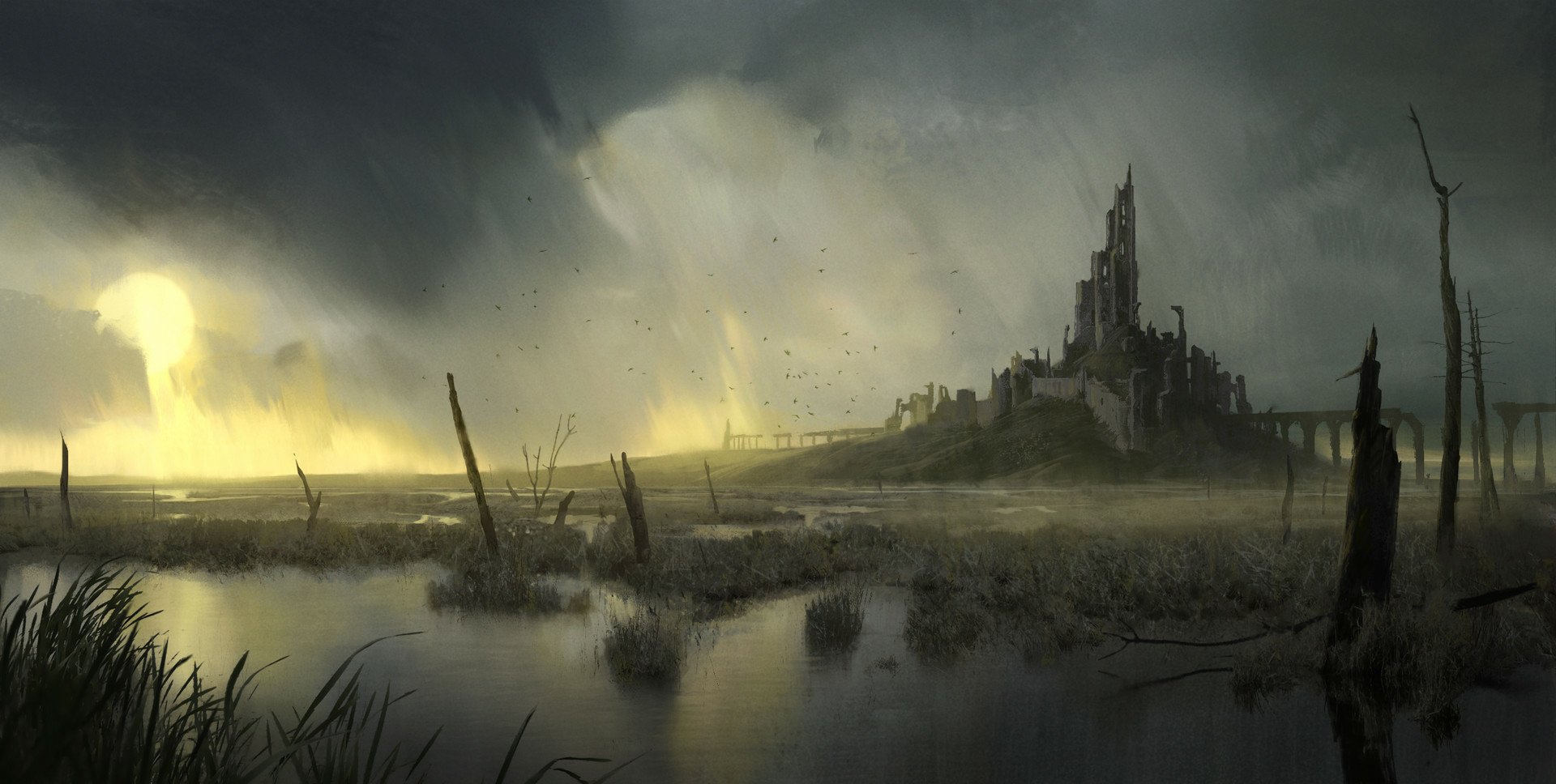
Aterwall - The Gray Fens
Swamp Fort - Estuary - Wetland - Southern Marshes - Frontier Settlements - Backwater
History: "The southern swamp fields which cusp the southern peninsula of Aurelia had also been a place of miscreant bands and thieves long before the founding of Aterwall in the last century. Built upon the foundations of old pirate colonies, the stone fortresses of Aterwall are remarkable in both location and the mere fact people had been so short sighted as to build heavy stone structures in a land of swamps. As the Corvus drove out the mutant swamps tribes, native beastmen, and the dominant pirate populations over several decades, they also worked to establish their own permanent footholds in the area during the reigns of the Corvus regencies of Aurelia. Seizing upon their moment of uncontested political power, the wily Corvus Clan emancipated Aterwall and the Clan in effect emerged as a rogue nation."
Geography
Aterwall is mostly comprised of leagues upon leagues of marshland and estuary riverbeds. Rice-paddies have been cultivated in recent years giving a much desired sense of location to certain haunts in the area, but the inconsistency of water levels and bizarre fluctuations of inclement weather makes navigating the mazes of ever-changing reed forests that compose the bulk of Aterwall nearly impossible. As fenland the elevation is flat and mostly sea level with few mounds of earth jutting out between the immense contained pools of stagnant salt water. Presumably the area was once a large coastal forest as petrified trees can still be found dotting the landscape. The swamps of Aterwall act as another geographical barrier which encases Aurelia like an impenetrable shield (hence the origin of its name). Several large islands can be found within the estuary itself, and these are mostly the main areas of inhabitance, the land being only just stable enough to support massive stone structures.
Deceiving the Enemy
Still pledging good faith to the Aurelian monarchy in secret, and relying on a technicality in which it proclaimed itself an 'island' of nativists; Clan Corvus sent aid to the former allied country of Lagonia which currently feuded with the oppressive Sultanate of Denastrus. Denastrus declared war on Aterwall,. Aurelia which had sustained heavy losses defending its borders from Vasthgothian invaders in recent years and as a result had become increasingly wary of burgeoning northern forces from Baltania; was reluctant to invest its remaining military into what it considered a foreign conflict. Aurelia declared several enactments of neutrality and refused to assist either side (though secretly it would still provide Aterwall with all manner of assistance). The enactment of a rogue state seemed to have been the designs of the Corvus for many decades; as the impregnable nature of the southern swampland and their immaculately designed fortresses made any attempts of invasion inherently suicidal. After several disastrous sieges of Aterwallian forts, Denastrus instead tried to enact a trade embargo around all of Aterwall's coast-ways; an embargo which was then summarily crushed by the Lagonian navy and a coalition of pirate fleets. Playing a careful game of politics ever since, the Aurelian monarch carefully tiptoed around an inevitable war. The monarchy insisted it retained a neutral state, assuring Denastrian emissaries of his complete cooperation; even publicly disavowing the Corvus to convince the world that Aterwall's piracy would not be tolerated. Denastrian leaders suspected his treachery immediately, but fearing the combined might of Aurelia, Aterwall, and Lagonia the Golden Circle would play along with the King's deception until they themselves had the advantage.

Tetra - City of Magic
Other Side of The World - Floating Islands - Fantasy - Hyper Reality - Land of the Arcane
History: "The history of Tetra is not easy or simple to relate. Some believe the city grew out the dust of its own accord, spawned from a mere necessity for it to be. Whether or not the buildings thrust themselves into existence is unknown, but the Chuu who occupied the empty halls of the floating cities would love to talk about the theory. Where Tetra came from or who is responsible for its construction seems unimportant when compared to the part it plays for all living beings in the world today. A true melting pot of the known world: Beastmen, Humans, and all manner of magical creatures can meet here in peace without fear of harm or impeding judgement. The magic which presides over Tetra is the most powerful and obvious to be known, and the great libraries and academies of knowledge draw scholars and lovers of peace from around the world."
The United Federation of Tetra
The governance of Tetra is presided over by the Chuu governors and the Council of Chuu. Those that have claim to rule a people are allowed a voice before the Chuu and are given respect and ambassadorship over their own respective regions. The magic which reigns over the city prevents aggressive actions of any kind and even join all language into a comprehensible amalgamation. Those who don't believe in the existence of magic leave Tetra without a doubt in their minds.
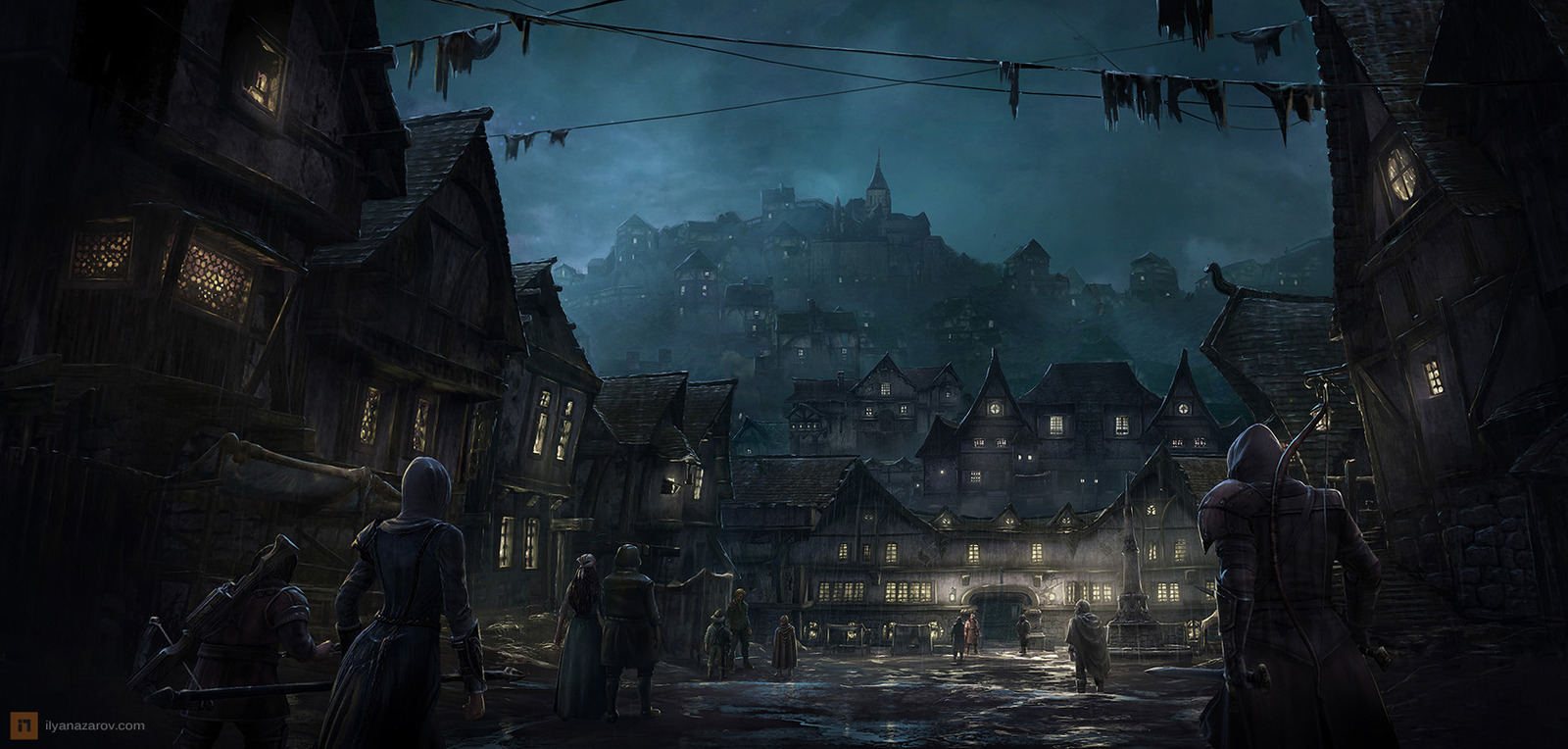
The Provinces - The Middlekingdoms
Corruption - Crime - Criminal - Black Market - Gangs - Mudtown - Vice - Poverty
History: "Named 'The Provinces of Excelcia' by their former masters The Immortal Church; the Provincials kept the term even after the Rebellions of the Rebel Lords removed Church authority over the land. After centuries of anarchy and infighting between the Rebel Lords the Middlekingdoms became synonymous with rampant poverty and crime. The streets were neglected and turned to mud, disease spread like wildfire, and creatures moved in from the wilderness to inhabit what death and famine had left abandoned. Those that survived attempted to rebuild but criminal organizations preyed upon the working class keeping them down. Those with any wits leave the Provinces fast and unlucky are those who happen to be born there."
Geography
The Middlgekingdoms naturally inhabit the middle ground between Baltania and the Center Sea, and because of this central occupation the landscape can vary drastically. Most of the area experiences temperate climates with the north being slightly colder and south slightly warmer. Constant rain keeps the ground soft and muddy, and large pools of deep muddy water form and disperse overnight. This bilious water helps spread disease and makes travel difficult; and mudslides are not uncommon. The areas near Vasthgothia are the most sparsely populated zones, as negligent lords have allowed raiders to prey on villagers without much reproach. Certain settlements can be complete ghost towns, having been abandoned or decimated by plague.
Cycle of Violence
The Kingdoms themselves are more like dysfunctional fiefdoms where a warlord occupies a castle and calls themselves a 'Lord' while adhering to criminal bosses and the mob. These rulers can last anywhere from a month to mere days; with the most prodigious carving out vast parses of territory only to overextend and be dissolved by their rivals. This constant warlike state sees little in the way of construction and much in the way of complete chaos and destruction. The resources that are left are usually kept horded in the great stone keeps occupied by the remaining Rebel Lords, who win favor by dispersing them to the people. Salvage is a popular enterprise, but the day is coming where nothing will remain to plunder and the Provincials will be forced to rebuild.

The Principality of Ere
Airships - Steampunk - Steam-power - Technology - Science
History: "Born of the Denastrian Expansion, Ere was founded with technology gifted to mankind by the Gnosis. While the Sultan dabbled in the religious aspects of Gnosian sorcery, the Princes of Ere saught a more practical approach to its applications. Turning Alchemy into a science rather than a theology, the Princes established a value of knowledge and truth above all else for their people. What proceeded was a boom of technological revelations such as air travel and harnessing wind and water to provide energy. Also unmistakably influenced by Tetra, Ere grew away from Denastrus in spirit and would eventually severe all ties with its father country after the fall of the sultanate. Ere has long been a peaceful nation, but there are some among them who would use their creations for war."
Geography
On the western flank of the Cocos Mountains stretches the unfathomable desert wasteland of Eremus. Ranging from flat crag to seas of dune dotted sand; Eremus holds many secrets that may never be known but to the brave (or suicidal). Where the great desert meets the sea, large flowing rivers empty down from the Cocos and meet in a basin known as Ere. The basin is one of the few places in the desert fit enough to provide for human life. The flat land stretches several leagues south to the borders of greater Denastrus where the territory meets the Lower Steppe and Tetra. What is west of the great barrens is unknown, but the desert is said to stretch to the end of the earth itself. The climate is hot and dry with little to no rainfall yearlong; only the hardy and the wise dare dwell in such an inhospitable place.
Important Settlements
Ere - Capital city. Dwarfed only by Calheidron in its majesty. A Bastion of Science and Discovery.
Kachhua - Mobile city carved into the shell of a giant tortoise by Ere's aristocracy and retired Princes.
Flora and Fauna
The little life that does exist is highly adapted to the harsh conditions of the desert wastes. Giant Lizards and Tortoise roam the desert, as well as immense poisonous Snakes. Insects are prevalent as well and make up much of the cuisine for all other creatures. In the Ere Basin all kinds of life flourishes, from giant freshwater fish to immense stork like birds. Giant camels are the primary form of transport to and from Denastrus, which despite its recent emancipation remains a valuable trade partner. Plants and even trees grow here, though they are much hardier than their Lagonian counterparts; they produce hard fruits and berries useful for all manner of things. The cacti of greater Denastrus appear here as well, but certain breeds can only be found this far south; a notorious breed which produces milky bulbs full of a psychedelic liquid called 'Mother's Milk' are especially rare. This specific plant, known as Pale Thorn, is highly profitable to harvest and usually elusively owned by nobles; but the produce makes a desirable target for bandit roves and pirates.
Armaments
Though they are pacifists, the people of Ere are not so daft as to not defend themselves. Alchemick scale armor is the preference for guards and noblemen as they regard the creatures of the desert with high esteem. Scale is also lighter than metal armors which get hot and cumbersome in the desert sun. Weapons are not openly carried or legal within the capital, but hidden weapons are not uncommon even among law abiding citizens. Guards prefer polearms such as the bladed glaive for their utility and prestigious appearance; as the implication of force is usually enough to deter common criminals. Ere swords have since fallen out of style for steam powered variants, but are still a sign of the Princehood and leaders of the state. These Steam-weapons are found only in Ere and function using a strange amalgamation of magic and technology. Other prototypes have been developed by Ere scientists, but they are not suitable for the rest of the world to know about or hope to acquire. Airships are a symbol of Ere's prosperity, but their use outside of the capital is highly restricted by the elders. If knowledge of their construction was leaked it could see the floating barges become weaponized, and break the core tenants of Ere.
Diet
As a delta Ere has an abundance of crop opportunities and horticulture is a booming industry. Enough surplus is regularly harvested to be used as trade with her neighbors and in effect the entire Center Sea. Grains, fruits, and vegetables are too diverse to list. Meat is not eaten, unless fish. Coffee from Lagonia is largely distributed but Tea is largely the preferred beverage of Ere citizens.
Religion
The people of Ere believe in the desert ancestors of humanity, and the pillars of Science and Rationality. They dislike the 'mystical' elements of magic, and believe that everything can be explained under an indisputable logic. This doesn't mean they are Atheist, quite to the contrary; the people of Ere regard their pursuit of knowledge to be a divine task handed down to them by the first people on earth and take the handling of such knowledge with the utmost seriousness. They revere the creatures of the world for their tenacity, especially those found in the deepest reaches of the desert. Those who defy the mathematical odds are also given much respect, and the elders speak of a great destiny in store for all of humanity if they find the will to achieve it.
The Moving Mountain
Kacchua, The Moving Mountain, has been used by the nobility of Ere for centuries. The people of Ere believe they descended from the gods of the desert and they often venture into the unknown wastes to be closer to heaven. The giant tortoise themselves are thought to live far beyond the breadth of human imagination, so building a city on top of one is not as implausible as it may sound; and using the advanced technologies of Ere make such a feat possible. As long as there has been an Ere there has been a Kacchua, and in times of war the nobles retreated into the desert for periods spanning years at a time. Ere has since become nearly unrivaled in its defenses however, after many centuries of battling pirates and bandit hordes; and Kacchua has since been relegated to a sign of status and the place where retired princes vacation until their demise. Steam powered innovations make life easy on the gigantic reptile, who is pampered and treated like an deity in its own right.
Deep Roots: The Ancient Sewers of Ere
Ere is thought to be one of the oldest human civilizations in the world, and the maturity and wisdom of its people seem to enforce this theory. Many cities have been buried in the sand and now serve as Ere's foundations. Expeditions into the depths of these gargantuan sewers might reveal the truth of humanity's origins, but the ways are so treacherous that the curious-minded are often met with the risk of becoming history themselves. The Sewers are thus largely ignored, except by smugglers and thieves who seek to deal out the technologies of the country for a nice profit.
Culture of Ere
Not much is known about the early people of the desert, except that they migrated eastward away from the wasteland. Those that remained in the Ere basin are equally ambiguous, but it is generally agreed that they were conquered and displaced over many thousands of years. Eventually after the Celestial Return the people who were met by the Sultan's army were the 'true' people of Ere, meaning those that had survived and dominated the delta for generations. Seeing their intelligence and resilience as assets to his dynasty, the Sultan adopted the people of Ere into Denastrus and took wives from the ruling house. His children born of this union would be the new rulers of Ere, the Princes and Princesses of the Sultanate. Much of the present culture was then erased by the introduction of Alchemy and Science; but some remnants of their days as a wasteland clan would remain ingrained in the peoples' psyches. With new tools at their disposal Ere soon became the technological superpower of the world; but communications with Tetra and its scholarly circles engendered that Ere would not use its powers for war unless provoked even against the will of the Sultan himself. When called to arms against their neighboring principality Lagonia, Ere chose to disobey the Sultanate and went on to become a neutral sovereign nation under Tetra's protection.
The men and women of Ere enjoy the fashions of Denastrus and Lagonia, with their own embellishments of desert wealth. Affluent women pierce their noses and wear lustrous golden chains between their nose and earlobes; a marked style of the nobility and the men don loose billowing garments of silk and goat wool.
Because the Ere are so secretive about their technology they can come off as a bit elitist to outsiders, but this is simply not the case. While some are in fact elitist the core tenants of Ere were formed to prevent their creations from being weaponized and used in foreign wars; revealing a deep care for life as a whole. This philanthropy is taught to all the youth as well and they are told never to take a life if it can instead be saved. Their time in the desert has revealed to them the precious nature of life and the value of living beings.
Before a Prince is crowned as a leader of the Ere they are led blindfolded into the desert for three days.
